

Hope you can join us on Sunday February 1 for readings and conversation – hosted by Damian Tarnopolsky, author of EVERY NIGHT I DREAM I’M A MONK, EVERY NIGHT I DREAM I’M A MONSTER. A long time friend of me and the series, I am excited to hear what promises to be an insightful and entertaining Q and A. One of the reasons, I asked friends to step in as hosts was to free up writing/editing time, but I couldn’t stop myself – I read the books!!
It is our first in person event of 2026. TYPE Books Junction. 6:30pm ET. Live-streamed thru Zoom. Register at EventBrite.
Here are my reviews (or however you’d describe my blethering):
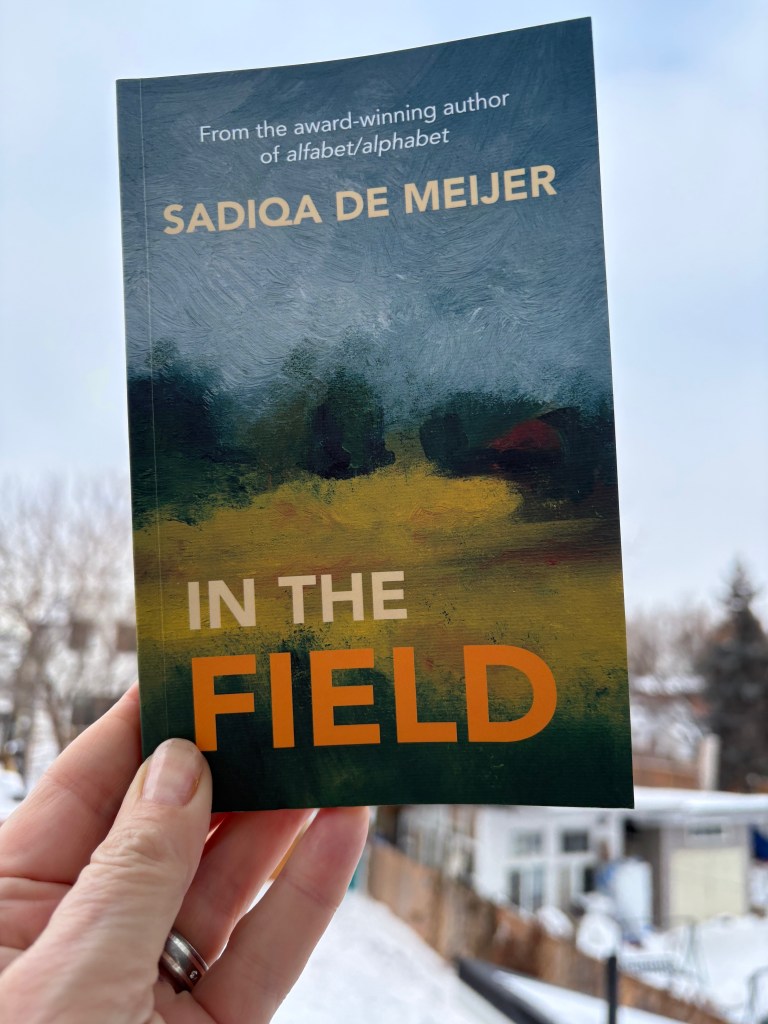
Sadiqa de Meijer’s collection of personal essays – nine in total – a gathering of significant moments in the author’s life told in emotional and sensual prose.
From the panic of losing a notebook, “almost a year’s worth of writing, from minute cursive paragraphs to large, hurried scrawls” to the anxiety of studying to be a medical doctor, “and still, and still, and still—I envy with a sickening ache any friend or acquaintance who works at painting or writing or dancing.” And the question of death rites and burial rituals and what our bones mean when we’re dead, and the line of our ancestries.
And there is the question of prisons, punishment or rehabilitation, and the violence we condemn, while allowing children to go hungry: “our violence takes the form of silent, continuous consent; it lives in us, a negative space with armored walls.” And while examining the journals of a holocaust diarist, and then touring the camp where she died, de Meijer considers all that Etty Hillesum wrote of the growing anti-Jewish sentiments, all while we’re witnessing the fascist white supremacy down south and the silence of many while another holocaust continues.
IN THE FIELD is more than a book of personal essays, they are life experiences poetically narrated with an emotional and spiritual eye for what it means to be a human standing alongside other humans. They compel the reader to consider who we are in relation to all that is happening around us, to other people, to those who went before us, and how (if we do) we see ourselves in relationship to others.
“As a boy…I hated sissies, although I surely was one…But the only people I could love would have to have had such a past. A boyhood that the strong survive. The strong alone.”
There are so many moments in I REMEMBER LIGHTS, Ben Ladouceur’s debut novel that are difficult to read. Told between 1967 and 1977 through the voice of a young man who wants to be openly who he is: “guilty” in a city that has criminalized homosexuality, it is difficult to imagine how anyone survived(s) when society criminalizes your very existence.
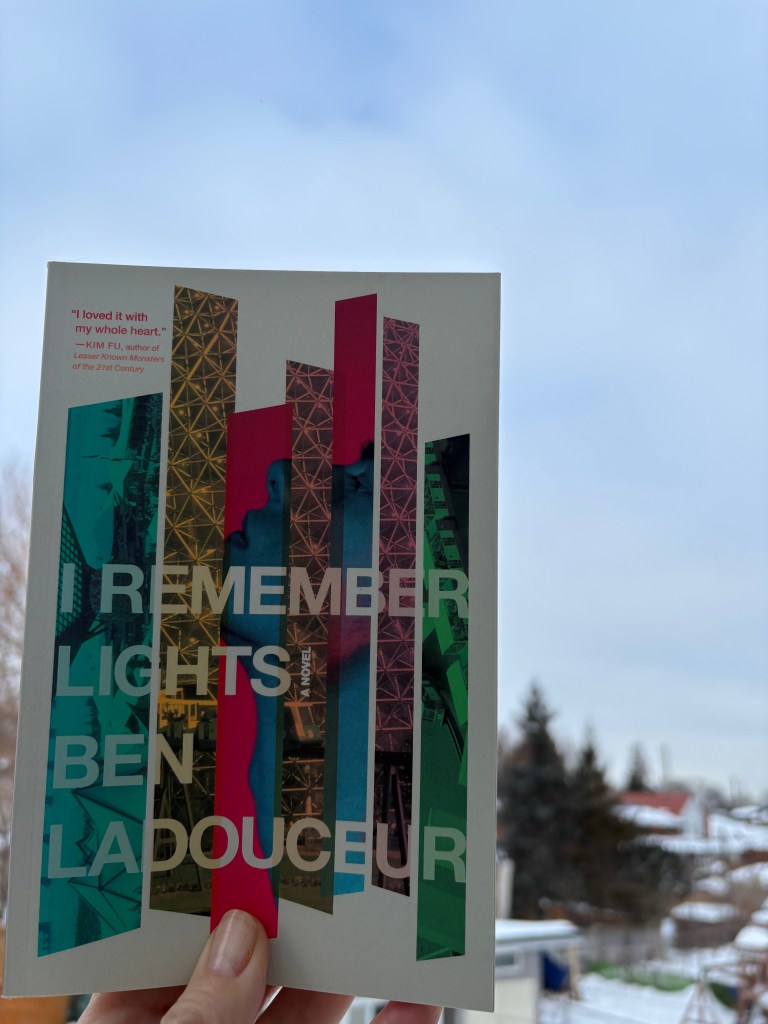
The unnamed narrator moves from small town New Brunswick to Montreal at the opening of Expo 67 and when his body opens to sexual desire he feels as though he fits into the earth perfectly—if only he could feel all that openly. He falls in love with Tristan, a Welshman who wants a simple life, to work quietly at a secure job and hide who he is from the world. As the novel moves between the summer of ’67 and a day and night in 1977 when our narrator is arrested during the Truxx raids, we witness an historically awful time through the eyes of some very strong men.
I REMEMBER LIGHTS is a gay man’s coming of age story—and when I say coming of age, I mean coming to terms with the reality that to good friends he will be seen as a danger to children and a “shit-eating, piece of shit freak” once they learn he’s gay, so more than this, it is a story about a man finding a way to come into himself and to really live—even when fear moved like ice through his brain, through all his body’s veins (page 32). But for gay men at the time of the novel, fear was every single day.
With lyrical prose and sensual imagery, it won’t surprise readers to know that Ladouceur is also an award-winning poet.
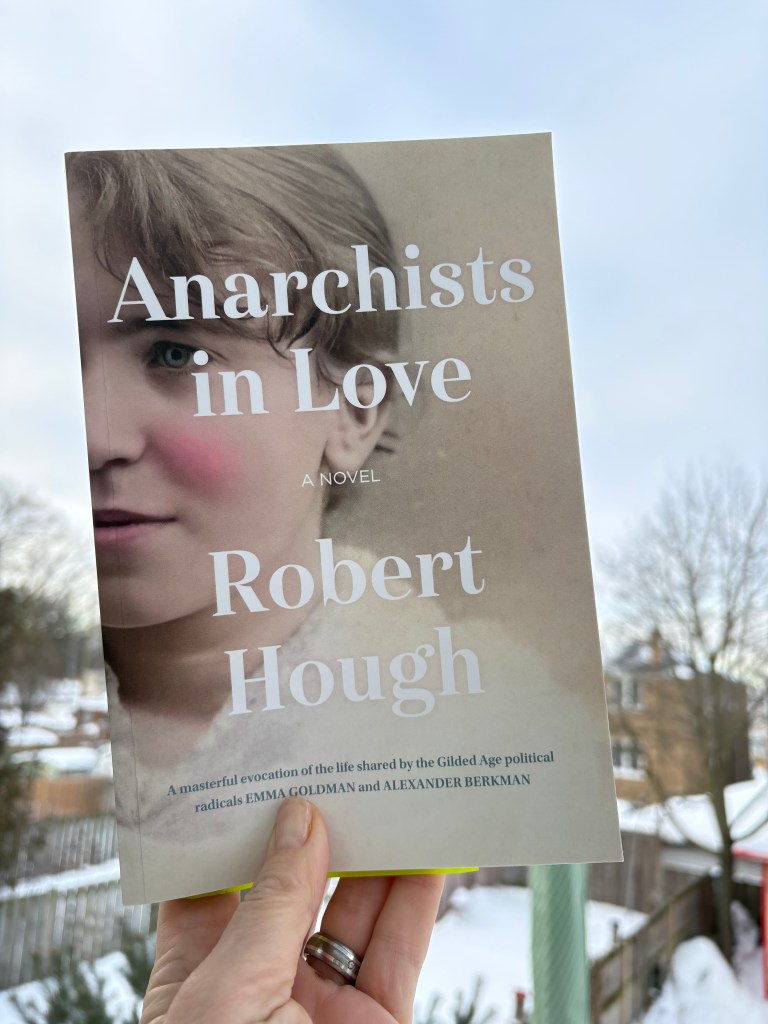
There is something exhilarating about starting a Robert Hough novel, but ANARCHISTS IN LOVE felt a bit different. With the rise (or revelation) of fascism and white supremacy, it’s impossible not to hope for the anarchy that is so alive in this novel.
Hough once again weaves together fact and fiction to bring us the anarchist movement of the turn of the last century, the gilded age as it is often described, a period of political corruption and capitalism. Emma Goldman, a young wife who wants more for herself than marriage to an ugly impotent man in Rochester, escapes in the middle of the night to New York City. Here she meets Alexander “Sasha” Berkman with whom she shares a passion for revolution and anarchy. Together, with Sasha’s cousin Modska, an artist, and various others they stir up collectives of labourers and unions, challenging them to fight for their rights.
The novel moves between very close third person perspectives, revealing a movement that defined a period and giving us a unique and troubling view of New York City at the time. With rising antisemitism, landlord abuses, labour exploitation and the internal chaos of a movement that shouldn’t have jealousy and competition, but which inevitably does, we get tension and conflict perfectly paced (until the end when the narrative picks up speed) that reveals the imperfections of any movement.
Hough has a knack for fierce female protagonists, and his portrayal of Emma Goldman doesn’t disappoint. I was particularly captivated by a poet named Sofia who says to Sasha at one point: “I think it’s impossible to create true art in the middle of the revolution. Everything’s too infected with politics, with it’s-got-to-be-this-way-or-nothing. When everyone’s mad, all art becomes dogma” She may be right, but I certainly hope that doesn’t stop all the artists in the world from rising and becoming anarchists, if only within their art.

 Junction Reads
Leave a comment